Guam · Childhood
My father. An $80 jersey.
I grew up on Guam without much money, resources or certainty. From the time I was ten until I joined the Navy at seventeen, it was mostly just my father and me.
He worked at a small tire shop. Money was always tight. My first year of high school football, players had to buy their own jerseys. Eighty dollars. That doesn't sound like much, but it was a lot for us. I don't know exactly how he found the money, but he did. Same with school trips. Whenever something would help me grow, he found a way.
That jersey became more than a jersey to me. It meant sacrifice, resourcefulness and love. My father never taught me investing or budgeting. He taught me something more basic:
When something matters, you figure it out.
Before I left for the Navy, he was in the hospital. Lying in that bed, he told me, “Do not let anyone or anything slow you down in life.” I thought he was telling me not to let his health keep me on the island. Later I understood he was giving me a rule for life.
My last memory of him alive is at the airport, smiling at me from a distance as I left to become a man in my own right. About a year later, at nineteen, deployed on a ship in 2009, I got the news that he had passed. I flew halfway around the world for the funeral. Standing over him, his words came back to me, and I understood he'd been talking about every loss and obstacle I would ever face.
I went back to the ship and finished the deployment. I've carried those words ever since.
His passing also left me with about $19,000 in funeral and related expenses at nineteen years old. It took me nearly ten years to pay off. Losing someone is devastating enough. A family shouldn't be financially wrecked on top of it. That's personal to me now.
I joined the Navy at seventeen because Guam was a small island and I wanted to find out what I was capable of.
There was also a less noble reason. I looked at the Army and thought I might get shot. Same with the Marines. The Air Force had planes landing in dangerous places. Then I looked at the Navy and thought, they can't shoot me if I'm far out at sea. Simple logic. It led to a career that shaped almost everything about who I became.
One of the best leaders I served under taught me with a screwdriver. Six of us were standing around explaining why we couldn't finish a job, because there was no screwdriver in our workspace. He asked how six sailors on an entire U.S. Navy warship could not find one screwdriver. We could have walked to another division. Asked someone. Borrowed one.
Just because the resource isn't in front of you doesn't mean it doesn't exist.
On one deployment I spent 127 straight days at sea. I was young, I didn't fit into any of the groups on the ship, and I was often the one called when something needed doing. It felt unfair then. Looking back, they called me because I was reliable. I couldn't control whether people accepted me. I could control my effort, my attitude and my output.
I went from E-1 to E-6 in about five years, mostly by being willing to outwork the people around me. Coming from not much, the deal seemed fair: pay, food, housing and clothes in exchange for doing my job. I never saw a reason to complain about sweeping a passageway.
I also learned from bad leaders. The “my way or the highway” types who led through fear and never listened. A lot of my leadership comes from deliberately becoming the opposite of them.
U.S. Navy · ~18 years
127 days at sea. One screwdriver.
2010 – 2025 · Sales
A $3,000 vacuum started everything.
At about twenty, a saleswoman knocked on my door and sold me a Rainbow vacuum for $3,000. I still own it.
She told me I could earn my money back by coming to an event that Monday. I went. The job was in-home demos of $3,000 vacuums. In my first twenty presentations I sold six to eight of them, ended up in the company's regional magazine, and found out I had a knack for this. Selling in a stranger's living room teaches you to build trust fast, read people and stay steady when it's uncomfortable.
Then came network marketing. I walked into my first event, saw BMWs and Mercedes outside, and figured it had to be a scam. I signed up anyway. Three days later I'd made about $1,300. Within three months I qualified for a company BMW. I went on to speak to rooms of one to two thousand people and built a team of more than 200.
Individual performance is valuable. Duplication creates leverage.
Around 2020 I moved into high-ticket sales, selling coaching and consulting programs from about $4,000 to $25,000 by phone and Zoom, and training sales teams of seven to thirteen people at a time. That's when I realized I didn't only love selling. I loved teaching it.
In 2025 I joined a high-ticket company in San Diego as its only closer. They were doing about $50,000 a month. In my first full month we hit $150,000. The next month, $277,000. I collected about $177,000 in cash in thirty days, and pushed the owner to raise his price to $10,000. He didn't think the market would pay it. The next day I sold $20,000.
I've also spent more than $100,000 on courses, coaching and business experiments, from dropshipping to Amazon to trading. Most didn't become businesses. All of them taught me something. That was my entrepreneurial education.
Money can come and go. Companies can fail to pay. The skills stay with you.
AULUNDREWFor all the revenue I'd helped create in San Diego, more than five figures of my commissions went unpaid.
In November 2025 I went to the owner about it. I had four sales calls on my calendar that day, and I told him plainly: this is business. If what I earned isn't paid, I'm leaving. It wasn't, so I left.
That changed the direction of my life. I had generated serious revenue for someone else and had almost no control over whether I'd get paid for it. I was tired of proving my value over and over while building companies I didn't own.
I spent the next forty-five days interviewing for other closing jobs. Some couldn't work around my Navy schedule. Some had weak pay plans. Some looked successful from the outside and weren't. I started asking myself whether I should keep selling someone else's vision at all.
Around the same time, a coach changed how I think about sales. The question stopped being “what tactic should I use?” and became who am I being while I sell? I worked through my own objections and patterns, learned to give myself some grace, and came out of it as what I call Aulundrew 2.0.
Sales isn't a bag of tactics. It's an expression of who you are being.
November 2025
Done building what I don't own.
December 2025 – today
An ad in front of the USS Midway.
In December 2025 an Instagram ad stopped me. A man standing in front of the USS Midway in San Diego said disciplined, hardworking people who wanted to change their lives should message him.
He was prior Navy. I was Navy. He was in San Diego. So was I. I messaged him, and instead of waiting to be recruited, I interviewed him about the industry and recruited myself. By the end of the call I was asking how to start.
I got licensed in January 2026. In February, my first full month, I wrote about $53,000 in annualized premium. The system worked because I followed it. The leader I joined is a six-time Hall of Fame producer. He had mastered production. I brought recruiting, sales training, culture, branding, technology and duplication.
The funny part: I'd come across this same organization in 2013, and again in 2020, when I started the pre-licensing course and quit. People who joined in those years went on to build huge agencies. I missed the train more than once. I don't intend to miss it again.
Insurance became the melting pot of everything I'd learned.
It lets me sell at a high level, teach sales, build a team, develop leaders, use technology, and help families with a real problem. And it lets me turn my father's death into a mission that protects other families from what I went through at nineteen.
I believe an agent needs three things: skillset and mindset, steady lead flow, and activity. The system creates the opportunity. The agent brings the work.
Neil was an associate pastor and Uber driver. When he started, his car had broken down and he had very little sales confidence. His first week, I honestly worried he wouldn't make it. By the second week I noticed what mattered more than his skill: he stayed late every night and asked good questions. We worked on tonality, communication and psychology. Within about three months he went from nothing to $40,000-plus months in annualized premium.
Mia was a twenty-year-old college student from Ethiopia, living in Ohio, selling in her second language. In her first month she nearly quit. Then she went to a convention, saw that the top agents simply worked consistently, and raised her activity. She struggled, kept asking me for coaching, and in July 2026 we started working together at the end of each night. That month she wrote more than $36,000.
Current skill doesn't decide future success. Coachability, work ethic and belief do.
My goal isn't only to produce top agents. A person should learn to do three things: sell at a high level, teach someone else to sell at a high level, and teach that person to develop another. The third level is where a business stops depending on one person. That's what I mean by leaders build leaders.
How I build people
Leaders build leaders.

The center of it all
My son. My deepest why.
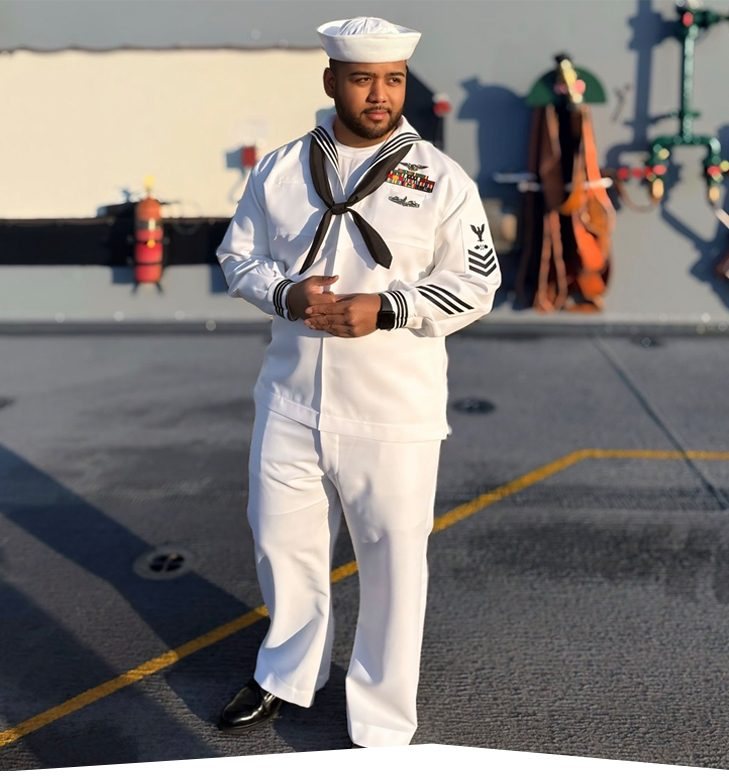
The deepest reason behind what I'm building isn't recruiting, AI, recognition or retiring. It's my son.
A couple of years ago I had the chance to have him live with me full time. Between Navy duty and time at sea, without family close by, I couldn't give him the stability he needed. Some mornings I was waking him at four o'clock to drop him at a friend's house so he could get to school. I could see it wearing on him.
Telling him he'd have to go back to live with his mom was one of the hardest things I've ever done. He looked at me and said, “This is not fair.” He was right. That moment broke something in me.
When I look at why, it comes down to two things. I didn't have enough financial freedom, and I didn't have enough control over my time. That's what I'm building now, so I can be present. He's thirteen, a straight-A student, and the thing I'm most proud of in this world.
Financial freedom creates choices. Time freedom creates presence.
Today I'm standing between two versions of my life: the Navy career I've known for nearly eighteen years, which is coming to a close, and the agency I'm building. I don't see another option besides making this work. Not because success is automatic, but because I'm committed to becoming the person who can produce it.
As my father taught me: don't let anyone or anything slow you down.
What I live by
My operating principles.
- Don't let anyone or anything slow you down.
- When something matters, find a way.
- Limited resources are not an excuse.
- Become the person others can rely on.
- Outwork the standard.
- Skillset without mindset is unstable.
- Sales is leadership.
- It's who you're being, not only what you're saying.
- Build systems that work beyond one person.
- Leaders build leaders.
- Opportunities pass to the people willing to act.
- Money comes and goes. Skills remain.
- Don't recruit everyone. Develop the right people.
- Technology should amplify people, not replace them.
- Long-term trust beats a short-term commission.
- Family is part of the reason for building.
That's the story behind the business.
If you're looking for more, let's talk.
I'm not recruiting everyone. I'm looking for the people who know they're capable of more and are ready to do the work.
Aulundrew